How to appear in ChatGPT when someone searches for a business like yours
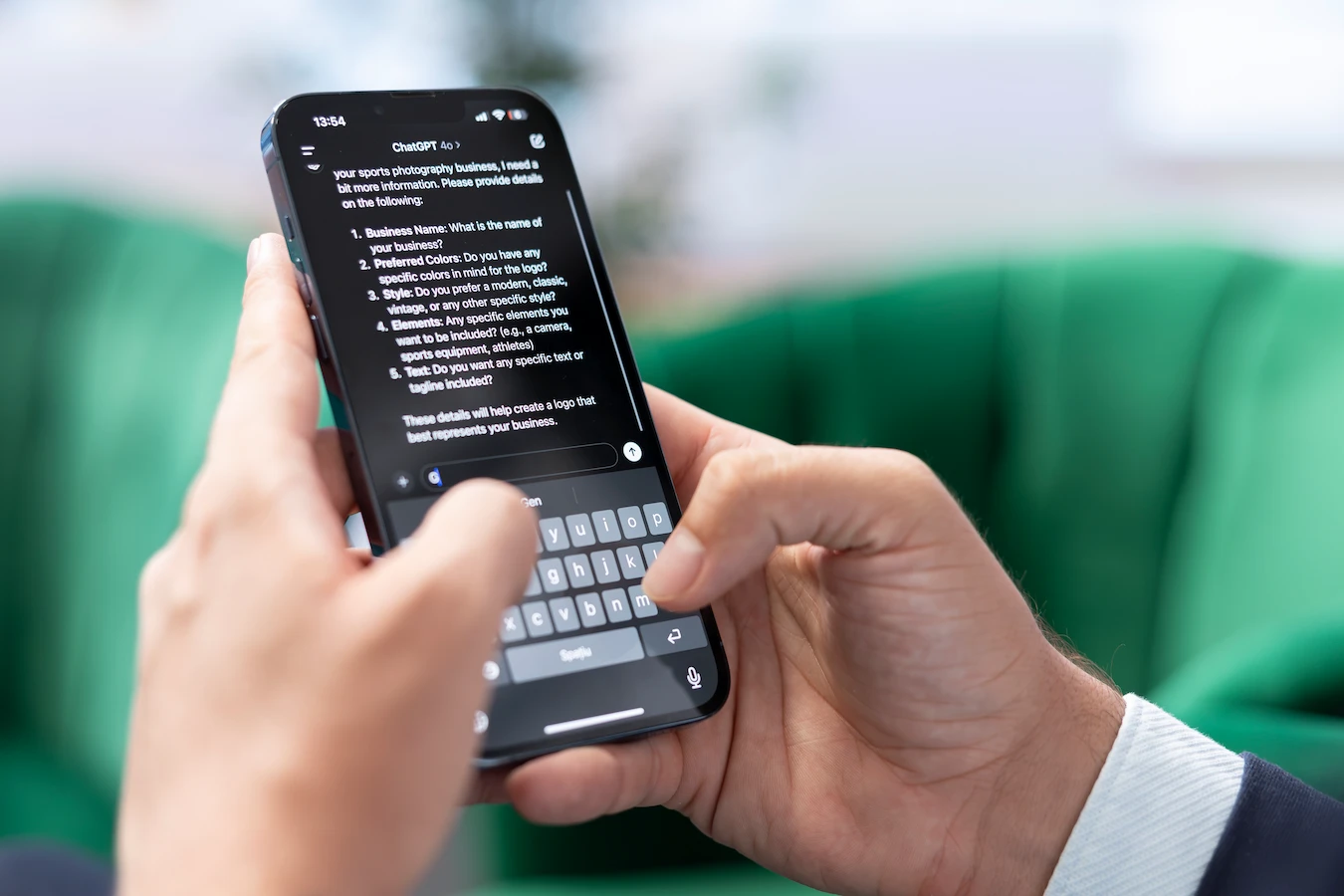
1. What “showing up in ChatGPT” actually means
Before, when someone needed to hire someone for something, they opened Google and searched for things like “web design agency Barcelona”, “web designer near me”, or “how much does a website cost”.
Now more and more people do something different: they ask artificial intelligence directly.
For example:
- What agency would you recommend to build me a website in Barcelona?
- Which company could build me a fast, professional landing page?
- What do I need to improve my website and get more clients?
And that changes everything.
Showing up in ChatGPT doesn’t mean holding the first organic spot on Google with a blue link. It means that when someone asks a question connected to what you sell, the model understands your business might be a good answer.
In other words: you’re not only competing for clicks. You compete to get mentioned, recommended, or used as a reference.
ChatGPT can search the live web when needed and show sources in the reply. OpenAI also states it uses OAI-SearchBot to surface websites in ChatGPT search experiences.
So if your website clearly explains who you are, what you do, where you work, who you help, and why people should trust you, AI has far more signals to latch onto.
Because artificial intelligence doesn’t “guess” what your business is about.
It reads signals.
It reads your website.
It reads your content.
It reads your services.
It reads your reviews.
It reads how you talk about your experience.
It reads whether you’re clear—or whether you blend in.
Here’s the key: in an AI-era website, your site doesn’t just need to persuade people—it also needs to be straightforward for algorithms to interpret.
Showing up in ChatGPT means being there at the moment someone asks for a recommendation, a solution, or a decision. That can be enormously valuable—because they’re no longer casually browsing—they’re looking for guidance.
The question is no longer just:
Am I ranking well enough on Google?
The new question is:
When someone asks ChatGPT about a business like mine, does my company exist to the AI… or am I invisible?
2. How ChatGPT chooses which businesses to recommend
ChatGPT doesn’t recommend a business because it “likes” one more than others. It recommends what it supports when it finds clear signals that a business genuinely fits what someone is asking for.
For example, if someone asks:
Which company can build me a professional website in Barcelona?
The assistant will typically try to work out:
- what service that person actually needs
- which city or region they mean
- what kind of company feels more trustworthy
- which sites explain clearly what they do
- which businesses show credible trust signals
- what information looks up to date and easy to verify
So showing up in ChatGPT isn’t about a hack. It’s about being easy to understand, easy to verify, and easy to recommend.
That’s where your website matters a lot.
If your site clearly says you do web design in Barcelona, explains your services, shows real case work, pricing, reviews, contact details, location, and practical content, the model has far more signals to understand who you are and when it should mention you.
If your site is generic, thin on content, unclear about where you work, or hard to tell apart from everyone else, you’ll look less relevant to the model.
OpenAI explains that ChatGPT Search can use web search, relevant sources, and approximate location to improve answers. It also says there’s no way to guarantee placement—but it does recommend allowing OAI-SearchBot to crawl your site.
In short:
- ChatGPT recommends what it can understand.
- It leans more on what it can verify.
- And it favours what best answers the user’s question.
So if you want to show up in AI answers, your site has to stop sounding like “just another company” and start behaving like a clear, useful, trustworthy source.
3. Why your website still matters for AI
Even though people talk about artificial intelligence all the time now, one thing hasn’t changed: if your business isn’t clearly explained online, AI will struggle to understand what you do.
ChatGPT can’t recommend what it doesn’t know. And very often, your website is still the main place to learn what you do, where you work, and why someone should trust you.
Your website anchors your whole digital presence.
It’s where you can spell out:
- what services you offer
- who you help
- which areas you serve
- what experience you have
- what results you’ve delivered
- how people can contact you
That matters because AI isn’t just hunting for random keywords. It hunts for context.
A site that says “we build websites” isn’t the same as one that explains:
“We do web design in Barcelona for businesses that want more leads, a stronger brand image, and a fast, clear site built for SEO.”
The second sentence packs in far more signal: what you do, where, for whom, and to what end.
That’s exactly what intelligent systems need—clear, concrete detail that matches how people actually search.
So your website can’t just look attractive anymore. It needs to be written and structured so both a visitor—and an algorithm—quickly see why your business is a sensible choice.
In practice, your site is like your pitch deck for AI.
If it’s incomplete, vague, or outdated, you lose leverage.
If it’s sharp, well organised, and reassuring, you gain an edge.
Because a website used to mainly persuade people who landed on it.
Now it also helps artificial intelligence know when to recommend you.
4. What your site needs so AI can understand your business
For artificial intelligence to understand what you sell, your site has to be clear. Extremely clear.
It isn’t enough to say “digital solutions”, “tailored services”, or “we help you grow”. All of that sounds nice—it barely explains anything.
The model needs concrete signals.
It has to grasp quickly:
- what you do
- who you do it for
- where you operate
- what problems you solve
- which services you offer
- what proof points you share
- how people can contact you
For example, claiming:
“We create unique digital experiences.”
…is nowhere near as helpful as saying:
“We build websites in Barcelona for businesses that want more enquiries and look more credible online.”
The second line helps a human—and the AI—much more.
Dedicated service pages, case studies, FAQs, reviews, your location, indicative pricing, and content that answers real client questions all help too.
The more structured and verifiable the information, the easier it is for AI to connect your business to a specific search.
In short: your site has to stop being merely pretty and start being understandable.
If the model can’t tell exactly what you do, it will rarely be able to recommend you with confidence.
5. AI SEO: what changes vs traditional SEO
Traditional SEO was largely about ranking a keyword on Google.
For example:
- “Barcelona web design”
- “Barcelona SEO agency”
- “how much does a website cost”
That still matters—but intelligent search changes how people ask.
Plenty of searches are no longer a single keyword. People ask whole questions instead:
- What agency would you recommend to build a website in Barcelona?
- What do I need for my website to bring in more clients?
- Which company could build me a fast, professional landing page?
The difference matters.
Google answers with a list of results.
AI tries to give a straight answer.
So cramming keywords isn’t enough anymore. Your site has to spell out context: what you do, who it’s for, where you operate, what experience proves it, and why you’re a trustworthy choice.
SEO for AI isn’t only about showing up. It’s about being understood.
Helpful comparison content—content that tackles real objections and supports a decision—matters even more, because anyone asking ChatGPT usually doesn’t want to sift through ten sites: they want clear guidance.
In short:
- You used to compete for clicks.
- Now you’re also competing for mentions, referrals, and trust.
To win that battle, your site needs to stay clear, specific, and verifiable.
6. Mistakes that stop ChatGPT from recommending you
One of the biggest mistakes is a website that stays deliberately generic.
If every line talks about “innovative solutions”, “digital services”, or “we help you grow” but never spells out exactly what you do, where you work, and who you help, models will struggle to build a clear picture of you.
Skipping proof is another common misstep.
You might say you’re professional, responsive, or highly experienced—but without reviews, case studies, projects, numbers, or examples, prospective clients (and assistants) don’t know what trust is based on.
Outdated, slow, or sparse sites hurt too: when evidence is thin, AI has fewer guardrails matching your business with a searcher’s intent.
There’s another frequent trap—talking only about yourself.
A credible site shouldn’t settle for “we’re the best”. It should answer what the buyer actually cares about—pricing, timelines, deliverables, your process, and what outcomes to expect.
In practice, ChatGPT is unlikely to put its weight behind businesses it can’t understand, validate, or connect to someone’s stated need.
If you plan to earn AI-driven visibility, your site needs to stay crystal clear, specific, and dependable.
7. How to prepare your site for ChatGPT, Google AI and Perplexity
Getting your site AI-ready isn’t some weird trick—it means spelling out exactly who you serve, proving it’s true, and making you easy for others (and assistants) to recommend confidently.
Start by making clarity non‑negotiable. Ban empty slogans. In the first handful of sentences a model should see what you do, where you work, whose problems you fix, and the outcome buyers get.
Specific beats generic. A “web design in Barcelona” page helps, but a guide on “WhatsApp landing pages for local lead generation” layers in far richer context for both readers and retrieval systems.
Stack trustworthy proof: testimonials, portfolios, grounded case blurbs, indicative pricing, FAQ answers—any concrete datapoint strengthens the storyline.
On the basics, keep performance fast, structure semantic with obvious headings, and don’t block major crawlers you intend to invite. OpenAI recommends allowing OAI-SearchBot if you’d like eligibility for ChatGPT search overlays. Google’s own AI experiences also pull from publicly available web documents and supplementary links— your house should be tidy if you want citations to happen.
None of this is about gaming the algo. Build a credible digital footprint coherent enough that, when someone asks broadly for businesses like yours, mentioning you genuinely makes sense.
8. Frequently asked questions
Can anyone guarantee appearing in ChatGPT?
No. Guarantees aren’t credible. What you can do is widen the aperture with a coherent, crawl‑friendly presence that visibly earns trust.
Does ChatGPT work the same way as Google?
Not exactly. Google still primarily returns ranked links. ChatGPT tends to compress what it knows into a direct answer, recommendation, or narrative summary.
Do I still need “classic” SEO?
Yes—foundational SEO still matters. Layer on content that is explicit, helpful, and easy for both humans and models to reason about.
What matters most for AI‑driven visibility?
Clear articulation—what you do, where it happens, who benefits, why someone should rely on you, and backing evidence for each promise.
Can a small company still show up?
Absolutely. A tight site can punch above its footprint: structured proof and clarity often make SMEs look more reference‑worthy faster than jargon‑heavy conglomerates online.
How long until you notice traction?
It varies. Signals need time to aggregate across your site plus corroborating external references before a model confidently points people your way.
9. Conclusion: how to start positioning in the AI era
Artificial intelligence is reshaping how people discover businesses, compare options, and decide who to hire or buy from.
Ranking well in Google used to be the headline goal. Today you also need ChatGPT, Google’s AI modes, Perplexity and similar tools to understand who you are, what you ship, and why recommending you genuinely helps the person asking.
That’s why your website still sits at the center of the story.
A fast, well-structured site with useful copy doesn’t just support customers—it gives algorithms cleaner signals so they can interpret you accurately.
The win isn’t “AI hacks.” The win is a clearer, more trustworthy digital presence that’s easy to recommend with confidence.
In this new phase, volume isn’t what wins.
Being understood is.
10. Quick checklist to show up in ChatGPT
✅ Allow OAI-SearchBot in
robots.txt—OpenAI relies on it to surface websites inside ChatGPT search responses.✅ Publish crisp service hubs: topics like Barcelona web design, landing pages, local SEO—each with intent you can defend.
- ✅ Add FAQs sourced from genuine client questions—not filler.
- ✅ Surface reviews, real project stories, transparent pricing cues, and a clear location footprint.
- ✅ Layer structured data: LocalBusiness, FAQPage, Service (where truthful).
- ✅ Skip vague copy—spell out precisely what you deliver, where, and for whom.
✅ Don’t block Google or Perplexity crawlers—Perplexity also refreshes indexed context through its own bots.